LETTERS - on Rilke & Fr. Joseph de Torre

In college, I met a man whose lectures changed my life.
He was a Spanish priest and our teacher in Christian Philosophy. He was a great social and political philosopher, a prolific writer, and an accomplished professor — but his humility and meekness, his calm and cheerful demeanor, were the things you noticed right away, long before you discover the brilliance of that mind, and his distinguised standing in the academe. For me he was the very kind teacher first, before I realized how fortunate we were to have this saint and genius before us. He never imposed himself or his thought to his students. The subject was a very complex matter to teach, but he had that mark of a truly good teacher — the ability to reach down and lift ordinary minds to meet and understand higher concepts. You don't get word salads or pretentious intellectualism. He had the gift of simplifying complex metaphysical ideas for ordinary students like me, whose interests barely touched the concept of God or Philosophy.
He opened my ignorant mind to the truth that faith and reason, science and religion, freedom, free will, and predestination are not in conflict with each other. He would speak of St. Thomas Aquinas, St. Ambrose, and St. Augustine as though he had met them personally. The conversion of St. Augustine was the great story of our first year. The image of this Berber saint is rightfully on the cover of his book, Christian Philosophy.
He taught us basic Latin and Greek. He spoke of his Basque roots. It heard it first from him, that Euskara may be the oldest language in all of human civilization. His discourses on love, beauty, and faith were ethereal truths.
What would I give to be in a class again with Fr. Joseph de Torre?
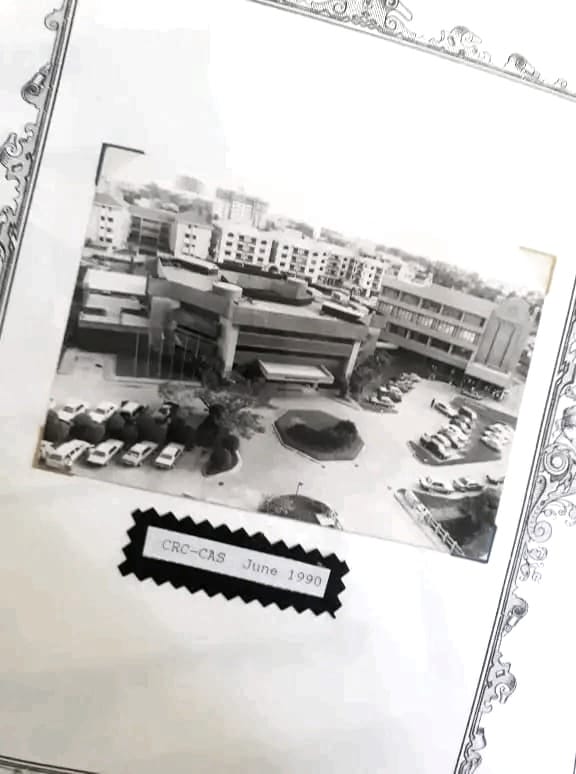
I regret that I did not keep my copies of his books. I regret that I lent all my test papers to a pesky friend who never returned them. Those papers had his signature, corrections, and comments — written by hand. He read each of our handwritten test papers and dutifully graded them. It was impossible not to love him. It was impossible to fail his class — you only had to be very diligent in taking notes. He could tell if you had simply copied someone else's paper.
I came to realize the wisdom in requiring his students to listen carefully, take notes, and submit test papers in their own handwriting. This may seem a mindless exercise, but it actually activates all your senses — your mind, your body, your will. You recall the lessons, you review your notes, you struggle or breeze through the topics — and your thoughts extend to your limbs, finally expressing themselves in writing, flowing into ink and paper. This man moved, taught, and wrote in the realm of angels, gliding among us mortals.
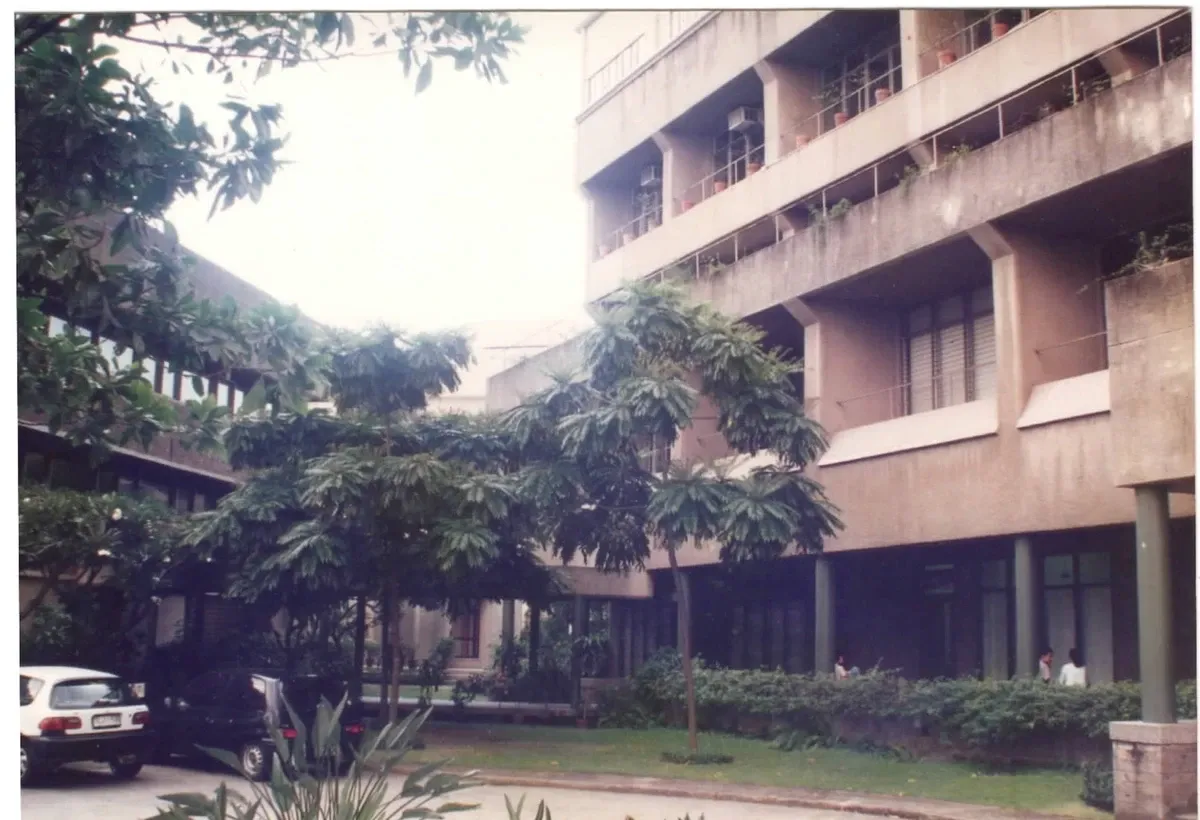
In this age when the Faith stands at the bend, if not at the edge of the abyss, I try to remember his voice and be touched by the Spirit that moved him. I was young then — secretly a daredevil and a little godless. But his lectures converted me, directed me to rest my restlessness in my Catholic faith, and cured my disgraceful agnostic mind. This particular effect is well known among those privileged to have spent time with him. Years later I discovered that Fr. de Torre had also profoundly influenced the life of a priest friend, who attributes his own conversion to Fr. de Torre. After a successful run in corporate life, he eventually became a priest of the Work.
One day in class, Fr. de Torre held up a tiny book — Letters to a Young Poet by Rainer Maria Rilke.
Since then the voice of Rilke has remained hidden in me.
Always questioning, always whispering.
"Go into yourself. Find out the reason that commands you to write; see whether it has spread its roots into the very depths of your heart; confess to yourself whether you would have to die if you were forbidden to write."
— Letter 1, *Letters to a Young Poet,* Rainer Maria Rilke
Member discussion